All About the Mexican Flag: History, Colours, and Symbolism
2026/02/03
The Mexican flag is one of the most distinctive national flags in the world. Its vertical green, white, and red stripes, with a detailed coat of arms in the centre, make it instantly recognisable.
It appears on public buildings and in town squares, and is flown during national ceremonies. Yet beyond its design lies a story shaped by mythology, revolution, empires, and modern history.
This article will explore Mexico’s flag as a symbol of the country’s layered and evolving identity. It will explain how the flag is constructed, the meaning behind its different elements, how it has changed over time, and why it continues to hold legal and cultural importance in Mexico today.
From the Aztec origin story of its central emblem, to its roots in independence movements, and more recent legal protections, the flag offers a visual narrative of the country itself.
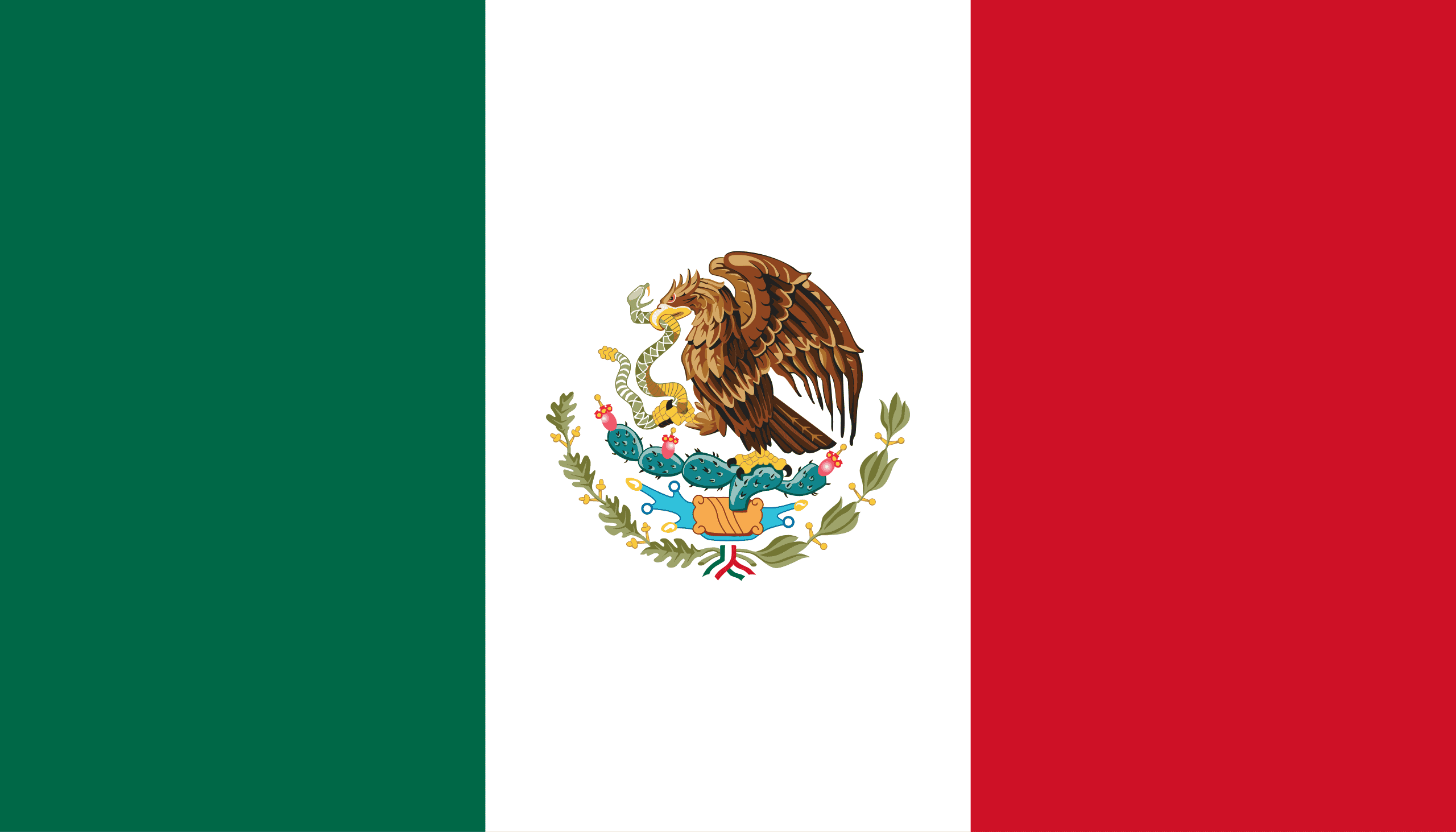
(Image reference: “Flag of Mexico”, public domain vector image from Wikimedia Commons, showing the modern tricolour with the national coat of arms centred on the white band.)
Mexican Flag Design and Colours
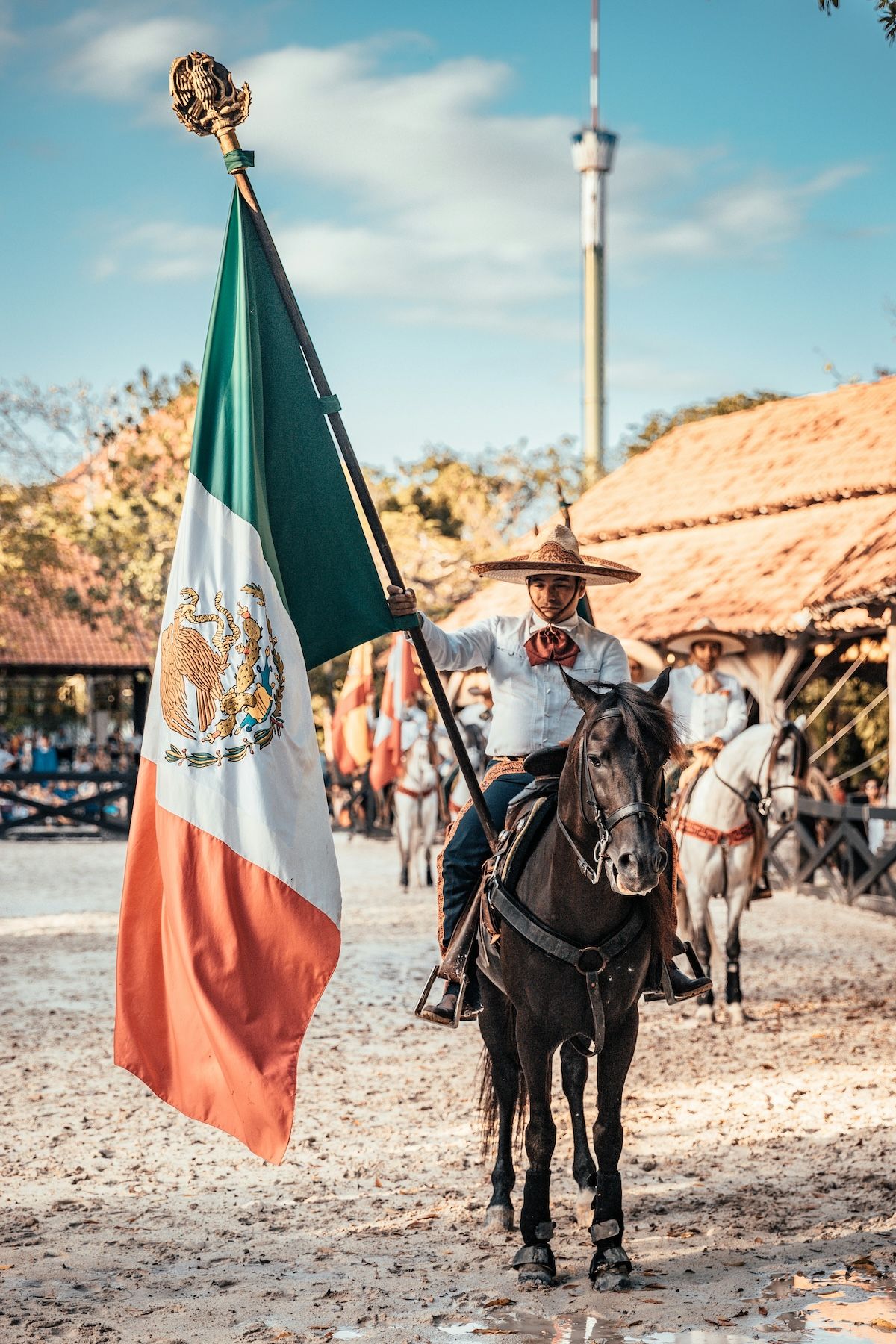
The current Mexican flag consists of three vertical stripes of equal width: green on the hoist side, white in the centre, and red on the fly side. What distinguishes the Mexican flag from other tricolours is its layout, which features the national coat of arms at the centre.
The design is regulated by the 1984 Ley sobre el Escudo, la Bandera y el Himno Nacionales de México (Law on the National Coat of Arms, Flag and Anthem of Mexico), which also governs how and when it may be displayed. Even the proportions of the flag are strictly defined by law, with a specific ratio of 4:7.
This legal framework ensures uniformity and establishes the flag as a protected national symbol across public life. Civil versions without the coat of arms exist for decorative or informal use; however, government institutions, schools, and military bodies are required to display the complete version.
Green, White and Red: the Symbolism Behind Each Colour
The colours of the Mexican flag have been interpreted in different ways throughout history. When the tricolour was first adopted in 1821, its meaning was explicitly political, with the colours associated with the so-called Three Guarantees.Green represented independence from Spain, white symbolised the Catholic faith, and red stood for unity between Europeans and Indigenous peoples.
Following Mexico’s transition to a secular republic, these meanings were informally reinterpreted. Today, green is commonly associated with hope, white with unity, and red with the blood of those who fought during the struggle for independence. Although widely taught, these interpretations have never been formally defined by law.
Despite alternating political systems and ideologies, the three colours have remained in place for over two centuries, making them one of the most enduring elements of the Mexican flag.
The Eagle and the Serpent: Mexico’s Coat of Arms
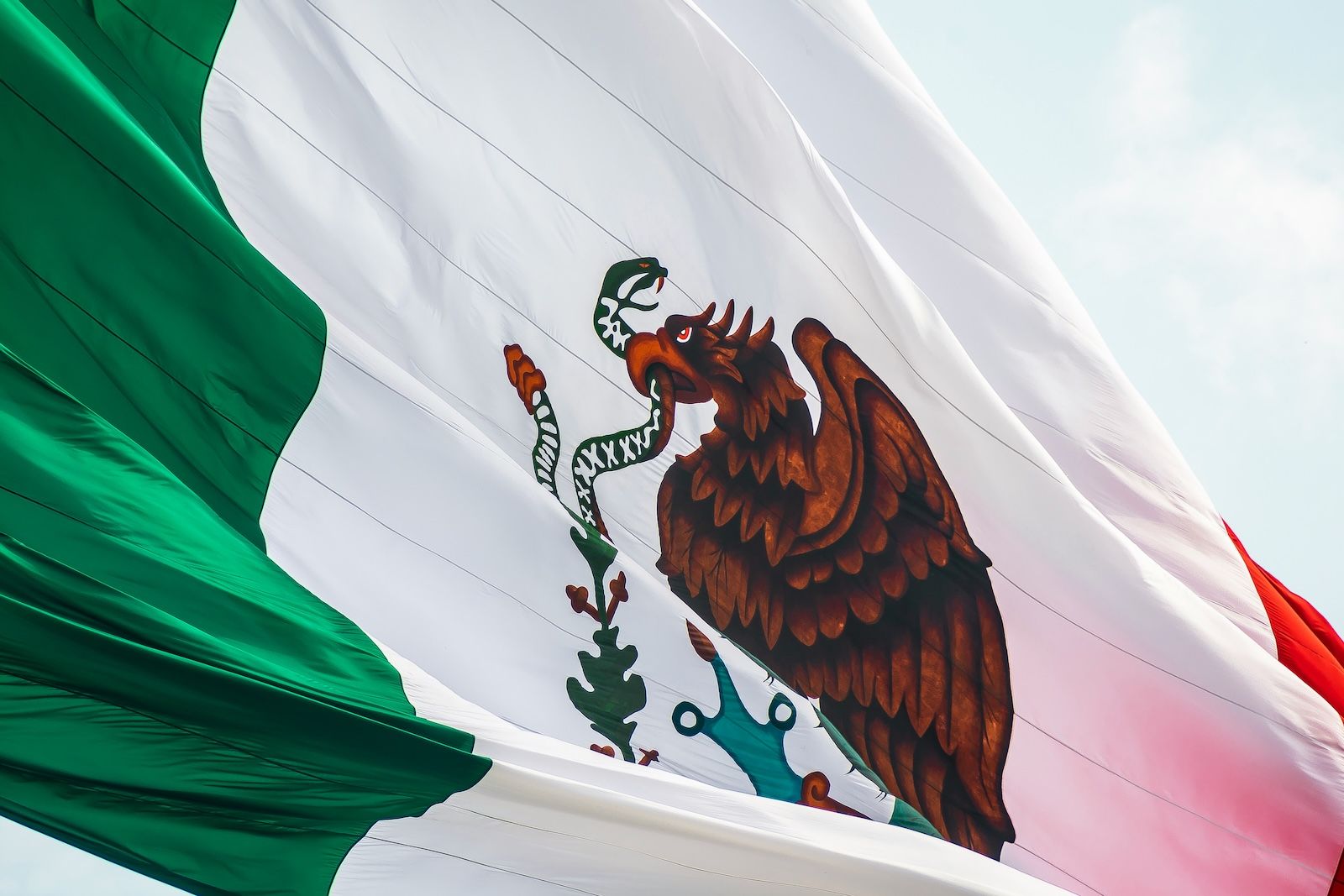
The most distinctive feature of the Mexican flag is its coat of arms. It depicts an eagle holding a serpent in its beak and talons, standing on a prickly pear cactus that grows from a rock, surrounded by water.
This strong image is grounded in Aztec mythology. According to historical sources recorded after the Spanish conquest, the indigenous Mexica people were instructed by their god Huitzilopochtli to found their city in “the place they saw an eagle holding a serpent on a cactus”, which was an island in Lake Texcoco. That place went on to become Tenochtitlán, the heart of the Aztec Empire and the eventual location of present-day Mexico City.
The bird on the flag of Mexico is a golden eagle, a species native to the region and officially recognised as the national bird. Associated with strength and power, the eagle’s posture and orientation have changed over time, but it has remained central to the official emblem since independence. The serpent has been variously interpreted as a symbol of wisdom, earth, or adversarial forces, while the cactus and lake ground the scene in the specific landscape of the Valley of Mexico.
Following independence, this Indigenous emblem was deliberately incorporated into the Mexican coat of arms to establish a link between the modern nation and its pre-Hispanic past.
The current iteration of the coat of arms was standardised in 1968, drawing on earlier depictions while maintaining specific design details. Oak and laurel branches below the scene represent strength and victory, tying together the ancient myth with contemporary republican ideals.
The motif is an important visual bridge between the different eras of Mexican history. It acknowledges the nation’s Indigenous origins, colonial period, and national self-definition in a single image. This multilayered symbolism is central to the flag’s complex meaning and remains one of its most studied and respected features.
Comparisons and variations
The Mexican flag is often compared to other international flags due to its layout. At the same time, Mexico’s own flag has not remained static, with different versions appearing throughout history, reflecting changing political contexts.
Mexican Flag vs Italian Flag
The Mexican flag is frequently confused with the Italian flag because both use vertical green, white, and red stripes of equal width. From a distance they can appear almost identical; however the similarities are limited to the combination of colours.
The Italian flag does not feature a central emblem and uses different proportions and shades of colour. Its origins are tied to European revolutionary movements of the late 18th century, influenced by the French tricolour. Historically, there is no evidence that either flag directly influenced the other.
Historical Variations
Several variations of the flag have existed throughout history, each evolving over time. During the First Mexican Empire (1821 to 1823), the eagle was shown wearing a crown, indicating the monarchical system of the time, under Emperor Agustín de Iturbide.
Later versions removed the crown as Mexico transitioned to a republic. During the 19th century, the eagle’s position varied, sometimes facing forward rather than in profile, and the serpent was not always included. These changes reflected the lack of a single standardised design and the influence of different political regimes.
During periods of political instability, including foreign interventions and internal conflict, the flag became a contested symbol and each regime sought to align the motif with its own vision of Mexico.
These earlier flag designs are now preserved in museums and archives, offering insight into how collective symbols evolve alongside political change.
History of the Mexican Flag
The history of the national flag is closely tied to the country’s political development. Its evolution can be divided into three main phases: the independence period, the 19th century, and modern standardisation.
Early Designs and Independence
Before independence, Mexico (known as New Spain) did not have an official flag. Instead, Spanish royal banners and religious standards were used until the War of Independence (1810–1821), when insurgent leaders adopted banners that blended religious imagery with emerging nationalist sentiment.
One of the most famous was Miguel Hidalgo’s use of the image of the Virgin of Guadalupe, which helped mobilise popular support but did not function as a national flag. As the independence movement progressed, there was a growing need for a unifying emblem.
The Army of the Three Guarantees, led by Agustín de Iturbide, formally adopted the green, white, and red flag in 1821. Each colour represented one of the guarantees underpinning independence: religion, independence, and unity. This was the first clear expression of the Mexican flag as an intentional national symbol rather than a revolutionary banner.
19th Century Transformations
The 19th century was a time of profound instability for Mexico, with frequent changes in government, and historic Mexican flags reflected this turbulence.
Following independence, the short-lived First Mexican Empire introduced imperial symbols, including the crowned eagle.
After the empire’s collapse, successive republics altered the flag’s design to reflect changing political ideologies. The removal of the crown signalled a rejection of monarchy, while variations in the eagle’s posture and adornments reflected differing interpretations of national identity.
Foreign occupations and internal conflict further influenced flag design, particularly during periods when competing governments claimed legitimacy. During the French-backed Second Mexican Empire under Maximilian I (1864–1867), imperial symbols returned briefly, once again reshaping the flag’s appearance.
Throughout this period, there was no single authoritative version of the flag, and artists and officials interpreted the central image with relative freedom.
Modern Flag Adaptations
In 1916, President Venustiano Carranza issued a decree specifying that the eagle should be shown in profile, based on pre-Hispanic norms. This decision aimed to highlight the country’s Indigenous heritage within state symbolism.
The current design was finalised in 1968 and legally protected in 1984. Since then, the flag’s use has been carefully regulated and subject to strict ceremonial protocols. Flag Day, observed on 24th February, reinforces its civic role for the Mexican people.
Cultural Significance
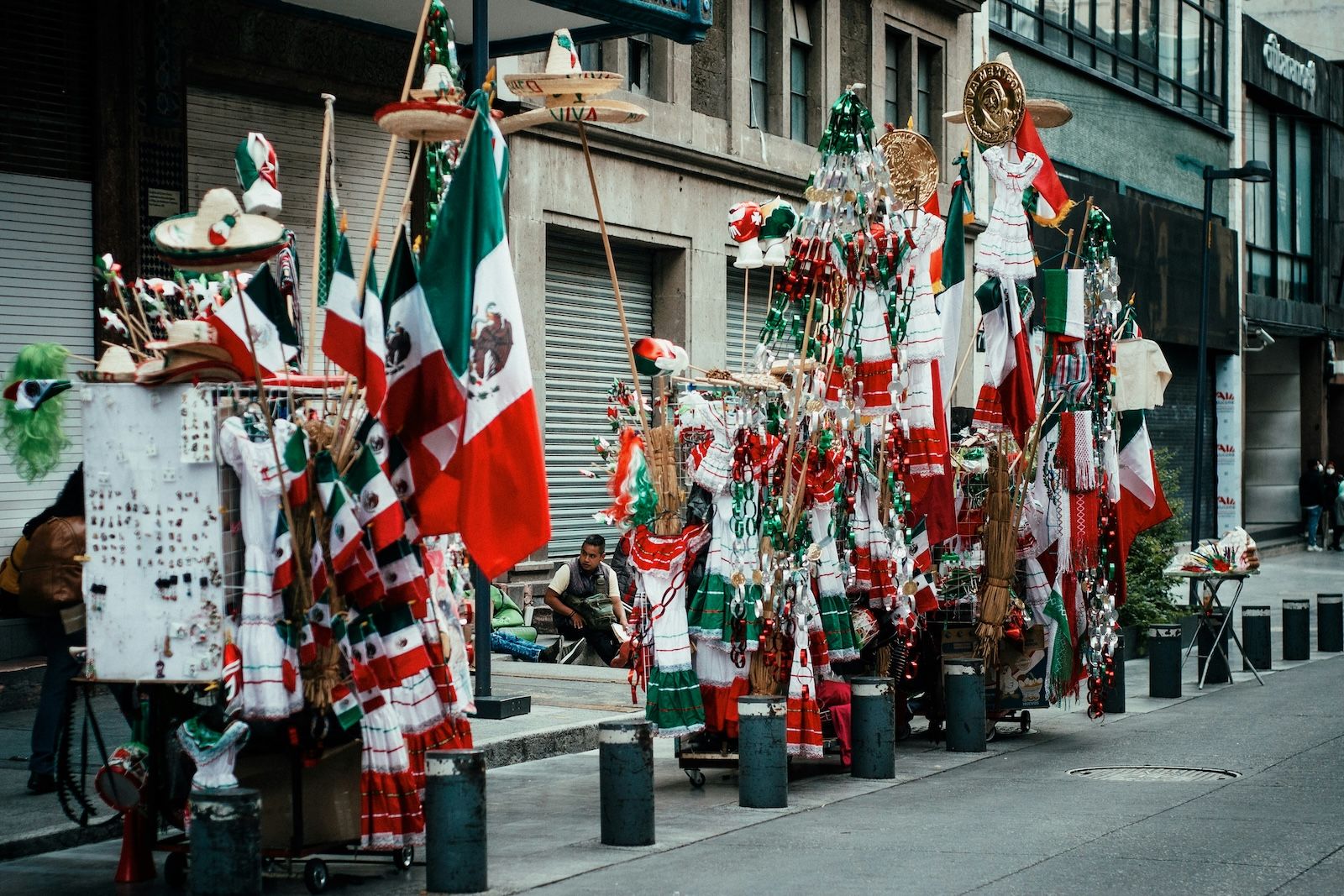
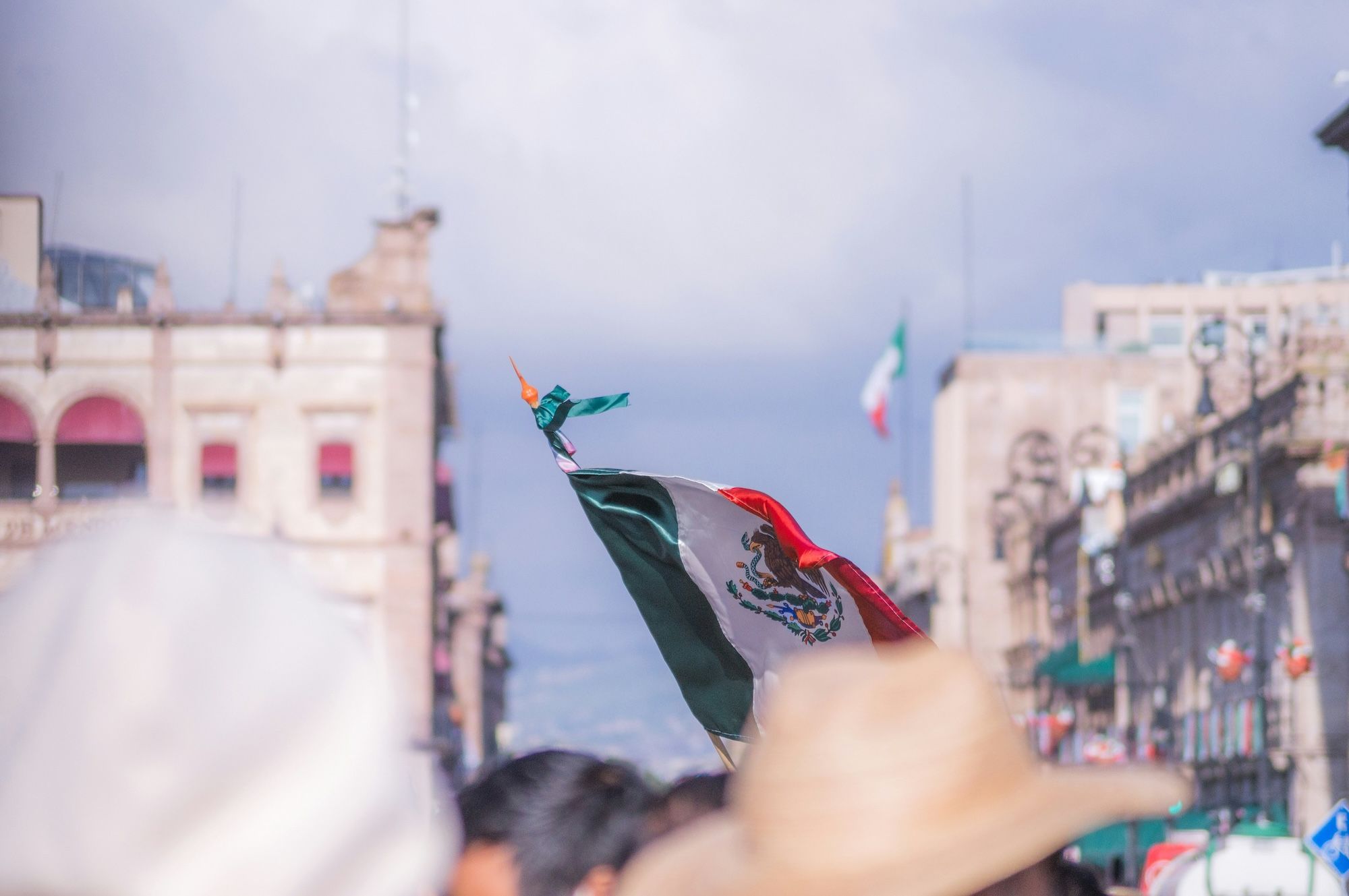
Beyond its official status, the Mexican flag occupies a central place in daily life and cultural expression. It is proudly displayed during national holidays, sporting events, and public ceremonies, serving as a visible expression of collective identity.
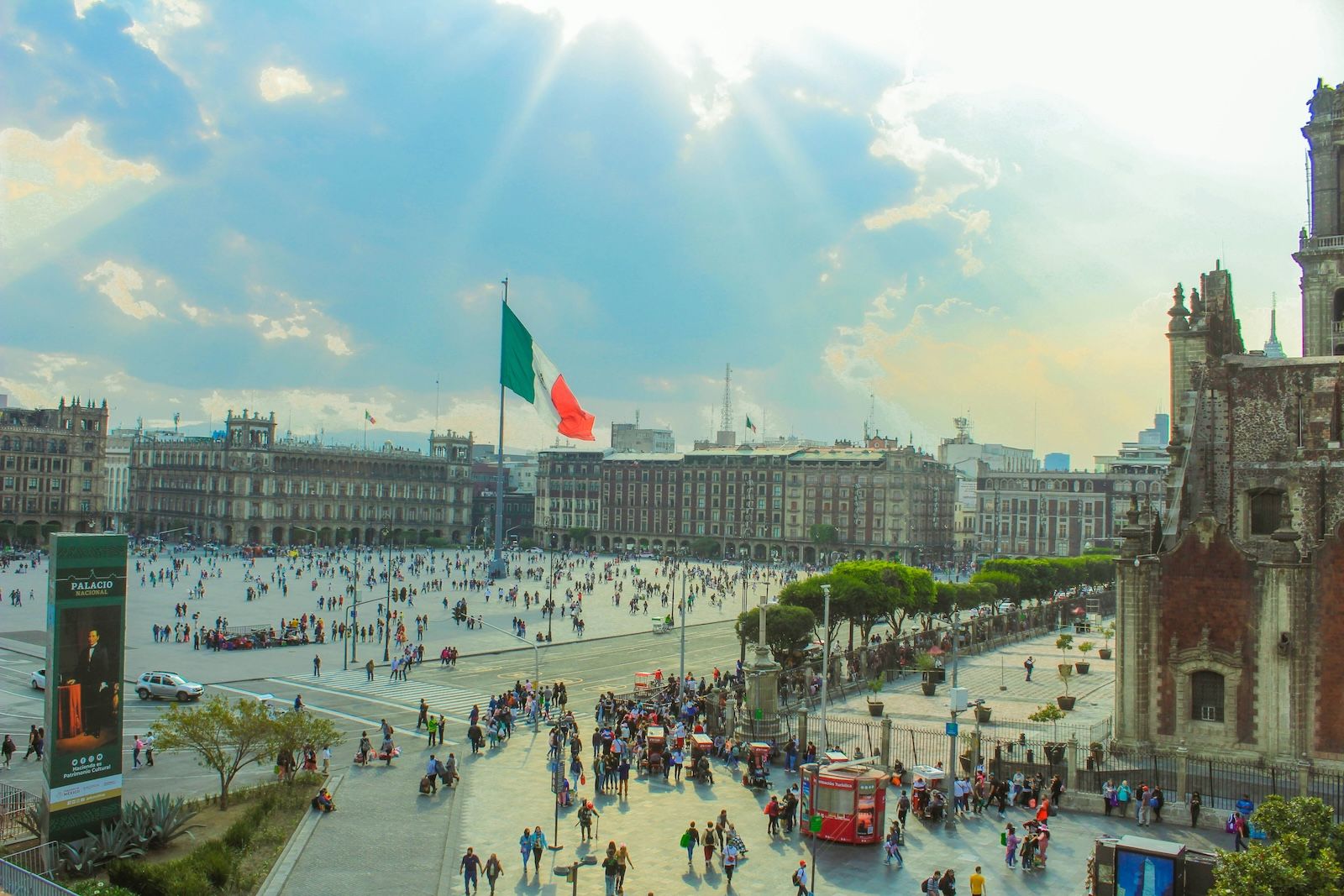
On Mexico’s Independence Day, celebrated each year on 16th September, the flag is flown in public squares and displayed at home. While the flag’s symbolism is widely recognised, its importance equally lies in its role as a collective reference point, linking earlier narratives with the nation’s contemporary identity.
The flag also plays a role in education, where its symbolism is taught as part of a broader narrative around the country’s history and citizenship.
In contemporary Mexico, the flag’s significance continues to evolve, and it is invoked in moments of solidarity, protest, pride, and remembrance. Through these rituals, the flag remains a shared reference point across generations.
Cultural Exchange Between Mexico and Qatar
The Mexican flag is the result of political and cultural choices made over more than two centuries. Its colours reflect the ideals that shaped independence, while its coat of arms anchors the modern nation in pre-Hispanic mythology.
Together, these elements form a national symbol that expresses continuity through change rather than a single fixed meaning. Understanding the story behind the Mexican flag offers insight into Mexico itself, a country defined by layered identities and traditions.
As Qatar and Mexico collaborate this year through Qatar Canada and Mexico 2026 Year of Culture, the Mexican flag offers a meaningful lens through which to explore history, identity, and cultural dialogue.