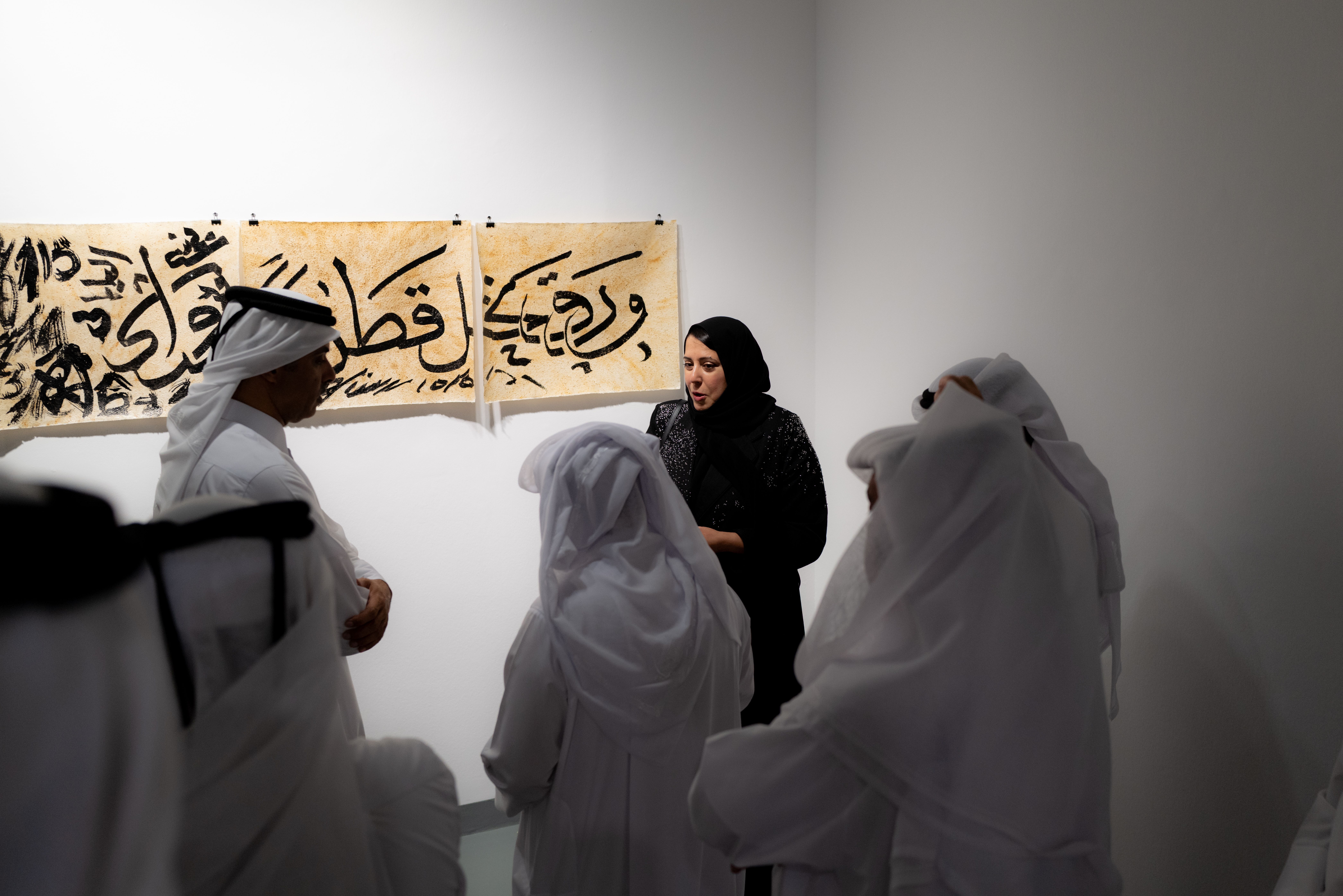
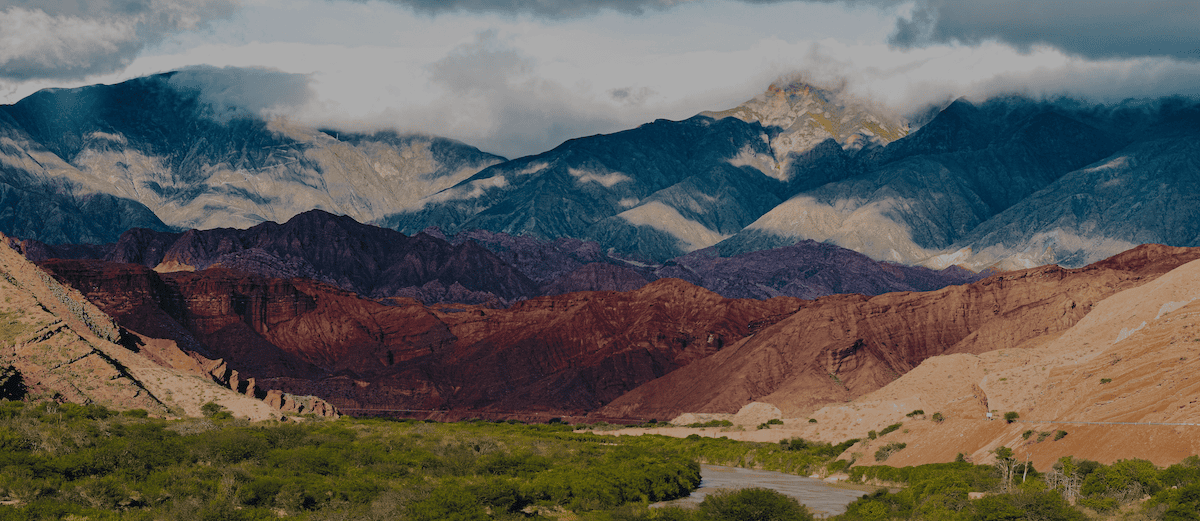
Before a mark is made, the paper has already begun to speak. Its fibres hold the memory of the place where they grew, while every sheet carries the trace of water, pressure and the hands that shaped it. By the time an artist approaches the surface, it is no longer blank. It is already carrying a landscape.
This is the quiet premise behind Dialogue of Papers, an exhibition on view at Katara Cultural Village in Doha from 21 September to 4 October 2026. Presented by Years of Culture in collaboration with Qatar Museums and Katara Cultural Village, the show brings two chapters of an artistic exchange together for the first time in the city where the project was born.
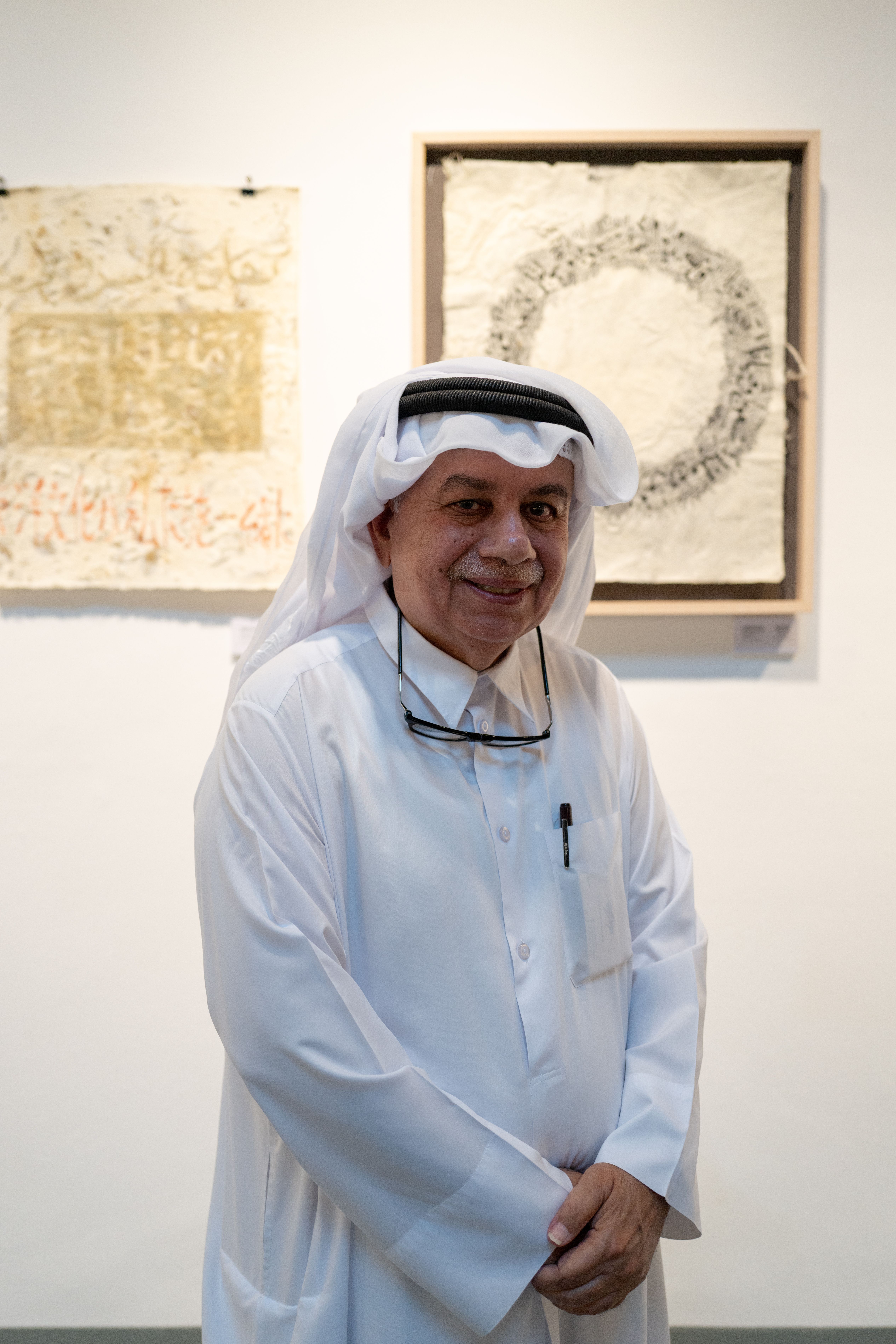
The story begins with a single Qatari artist and a decades-long obsession with a material most people take for granted. Yousef Ahmad started experimenting with paper as an artistic medium in the 1980s, travelling to Japan, Thailand, Nepal and India in search of locally handmade sheets. Over time, the search led him back to his own soil. He began making paper from the fronds of Qatar's palm trees, a plant that has survived the desert's harshness and scarcity of water for centuries, and turned that fibre into a surface that connected his practice to the land, its natural resources and his personal memory.
That material became the starting point for a conversation that crossed borders.
Qatar and Japan: Two Traditions on One Surface
In 2022, Years of Culture revisited its relationship with Japan, the initiative's first partner country back in 2012, to mark fifty years of diplomatic relations between the two nations. In Ahmad's Doha studio, Japanese artist Hayaki Nishigaki worked alongside him, combining pulp from Qatar's palm trees with Japanese kozo fibres, a material deeply associated with washi papermaking. The resulting handmade paper became the foundation for 28 collaborative works.
Arabic and Japanese calligraphy met on the same surface. Symbols, imagery and gesture were not arranged as separate traditions placed side by side, but as elements of a single visual conversation, each mark responding to the other. The works were later presented at 3331 Arts Chiyoda in Tokyo, where Japanese audiences encountered the dialogue for the first time.
Qatar and Indonesia: From Desert to Forest
The project took a new direction during the Qatar-Indonesia 2023 Year of Culture, when Indonesian artist Widi Pangestu joined Ahmad for a residency and collaborative workshop in Doha. This time, Qatari palm fibre was combined with Indonesian abaca and mulberry, plants drawn from a landscape that could not be more different from the desert. Indonesia is an archipelago of lush, green islands, dense with forests teeming with plants of diverse shapes and hues. Qatar, by contrast, is a peninsula defined by its arid landscape, where the palm tree stands as one of the few living gifts the desert has offered.
Together, Ahmad and Pangestu created thirty-six works exploring how different environments shape people's lives, memories and creativity. The contrast between forest and desert evokes notions of fullness and emptiness, and yet both landscapes have sustained human imagination and artistic expression. The resulting exhibition was presented at the Emiria Soenassa Gallery at Taman Ismail Marzuki in Jakarta, where Indonesian audiences encountered the dialogue for the first time.
A Curator's Conviction
At the centre of both collaborations is a conviction articulated by Dr Aisha Abdullah Al Misnad, curator of Dialogue of Papers. "The founding idea for the project was that paper is never merely a surface," she says. "It carries the landscape from which it is made, the knowledge of the person who makes it and the visual traditions of the artist who works on it."
That principle gives the exhibition its quiet force. The works are not only about paper, nor are they simply records of collaboration. They show what can happen when artists begin with a material and allow it to lead the conversation, from the fibres of a palm tree to the inner bark of a Japanese shrub to the plants used in Indonesian papermaking. By bringing the Japanese and Indonesian chapters together in Doha, audiences can see how that dialogue has developed and acquired new meanings over time.
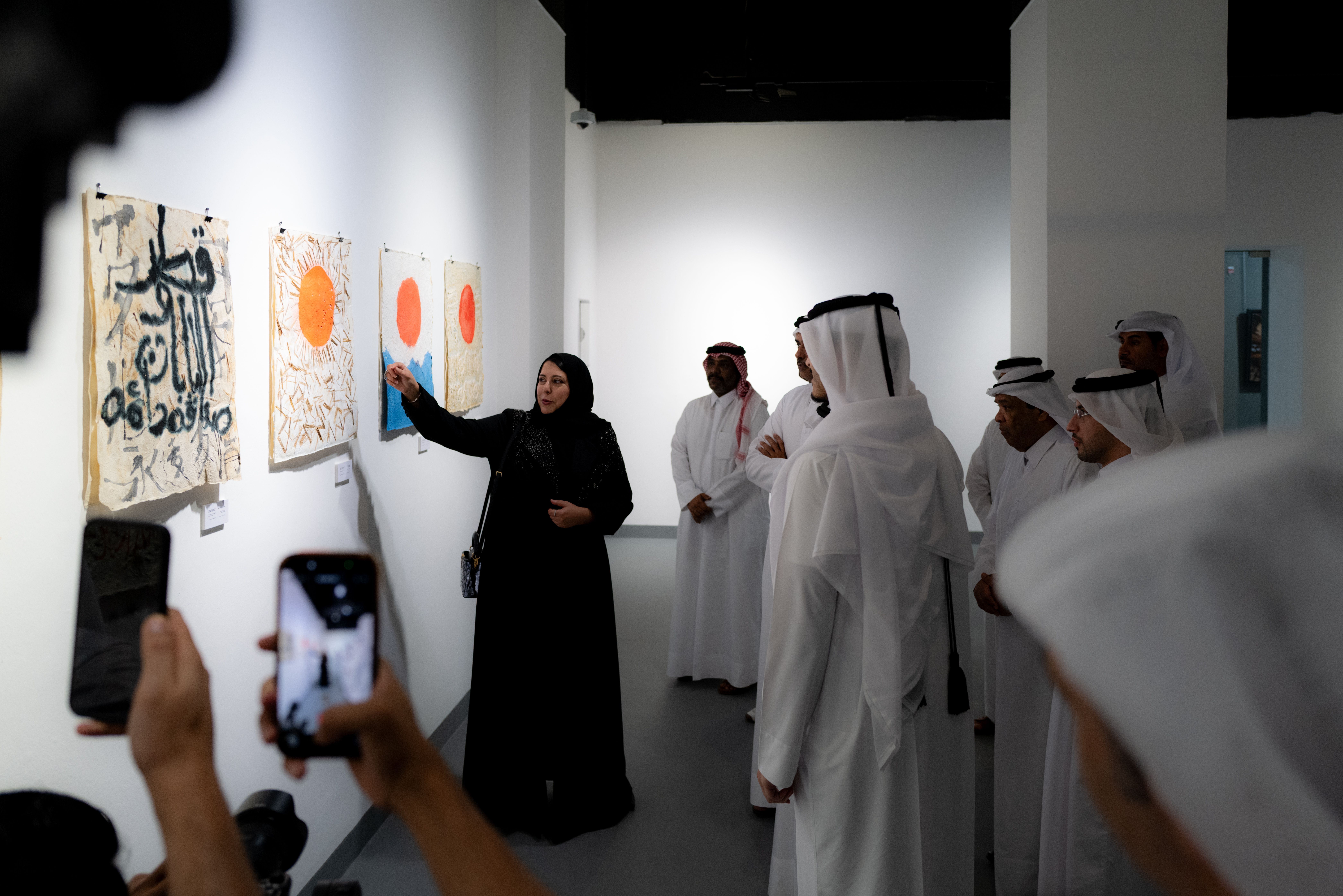
A Homecoming
What began as an exchange between two artists and two traditions has become an evolving platform for exploring material, identity and common ground. It is also an example of how relationships formed through Years of Culture can continue to generate new ideas long after a dedicated programme year has ended.
Now, for the first time, both chapters return to the city where the first chapter took shape. The homecoming is not a conclusion. It is an invitation to look closely at what paper can hold when it is made from the soil of one country, the fibres of another and the imagination of artists who refuse to see a blank sheet as anything less than a conversation waiting to begin.
Dialogue of Papers is on view at Katara Cultural Village, Doha, from 21 September to 4 October 2026.
Presented by: Years of Culture, in collaboration with Qatar Museums and Katara Cultural Village
Venue: Katara Cultural Village, Doha